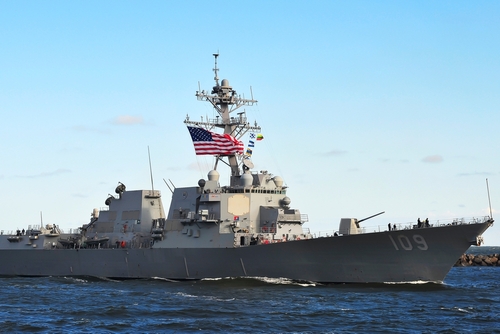
As America faces rising threats at sea, the Navy is scrapping its most heavily armed warships after burning billions of taxpayer dollars trying—and failing—to save them.
Story Snapshot
- The Navy is retiring Ticonderoga-class cruisers, the most heavily armed surface warships in the Western world, years earlier than once promised.
- Billions were poured into modernization refits, only for several upgraded cruisers to be decommissioned before returning to service.
- Navy leaders say the aging ships are maintenance “nightmares” with cracking hulls and obsolete radar, draining money from newer systems.
- Congress and the Pentagon fought for years over retirements, shipyard jobs, and fleet size while China’s navy kept growing.
How the Navy Ended Up Scrapping Its Heaviest Hitters
The Ticonderoga-class cruiser was built during the Cold War as the Navy’s floating quarterback, packed with up to 122 missile launch cells, more than any other American surface warship.[16] These ships carried the Aegis combat system and acted as the air-defense and command backbone for carrier strike groups. For decades, they were the high-end symbol of U.S. sea power and a warning to enemies from Moscow to Beijing.[4]
By the 2010s, most Ticonderogas had passed 30 years of hard service. Navy engineers began finding widespread cracking and structural fatigue in the hulls, plus corrosion in fuel tanks and key systems.[10] The Aegis radar on many ships was an older, analog design that struggled to track the newest high-speed Chinese and Russian missiles. Admiral Michael Gilday, then Chief of Naval Operations, warned that these aging sensors were nearing outright obsolescence against modern threats.[10]
Billions Spent on “Modernization” Only to Cut the Ships Loose
Instead of replacing the cruisers on time, past administrations and Congress chose a classic Washington half-measure: long, expensive modernization refits. Starting in the mid‑2010s, the Navy sent multiple Ticonderogas into deep shipyard overhauls to upgrade combat systems and extend hull life. The plan was to keep them operating into the late 2020s and even 2030.[6] In practice, the refits dragged on for years and costs exploded.[12]
As shipyards opened up the 1980s hulls, they uncovered far more damage than expected. Cracks, corrosion, and failing mechanical systems drove modernization costs to as much as 90 to 200 percent above early estimates, according to Navy budget justifications.[1] A later review found that between 2016 and 2021 the Navy spent at least $2.4 billion modernizing just seven cruisers.[16] Incredibly, four of those ships—Vicksburg, Cowpens, Leyte Gulf, and Antietam—were decommissioned before they even rejoined the fleet, turning roughly $1.84 billion of work into sunk cost.[2]
Maintenance Nightmares, Budget Squeeze, and the Push to Retire
By the early 2020s, Navy leaders were blunt: these ships were becoming maintenance “nightmares.” Analysts noted that many Ticonderogas cost more than $40 million per year just to keep running, roughly double the annual upkeep of newer Arleigh Burke-class destroyers.[3] Some cruisers spent more time tied up in shipyards than deployed at sea, eating up skilled sailors and repair crews who could have been supporting more reliable ships.[9]
Top Navy officials argued that every dollar locked into aging hulls was a dollar not available for new destroyers, submarines, and missile defenses. In a 2021 forum, Admiral Gilday laid out three main reasons to decommission the oldest cruisers: high cost to operate, poor reliability due to age and cracks, and declining lethality from outdated radar and combat systems.[10] Navy budget documents stressed that the “return on investment” was no longer there—major repairs and upgrades would cost so much that the ships’ limited remaining service life could not justify it.[17]
Congress, Jobs, and a Fleet Shrinking While China Rises
Congress did not simply accept the Navy’s plan. Lawmakers from shipbuilding and port districts pushed back hard, worried about job losses and a shrinking fleet while China surged ahead in ship numbers.[17] In multiple defense bills, Congress blocked or delayed retirements of selected cruisers, forcing the Navy to keep funding ships it argued were not worth the cost.[11] One House panel even moved to prohibit the retirement of USS Vicksburg and several other ships the Navy wanted to cut to save billions over five years.[11]
This political tug-of-war echoed the battleship retirement fights of the 1990s, when Congress and outside groups tried to keep Iowa-class battleships in service despite soaring costs and outdated guns.[21] It also mirrored the more recent Littoral Combat Ship disaster, where Congress blocked early retirements of clearly underperforming ships to preserve local jobs, even after the Navy admitted key systems did not work and requested to cut them to save an estimated $4.3 billion.[5][18]
What Comes Next for U.S. Sea Power
The Navy’s latest long-range shipbuilding plans call for all Ticonderoga-class cruisers to be retired by the late 2020s, with a few life-extended ships like Gettysburg, Chosin, and Cape St. George bridging the gap for only a handful more deployments.[8][12] The service wants to replace them with Flight III Arleigh Burke destroyers and future large surface combatants, but those ships are expensive, slow to build, and still years from filling all the holes the cruisers leave behind.[1][20]
For conservative Americans, the lesson is clear. Years of mismanagement, budget games, and political meddling under past leadership wasted billions and left the fleet smaller and older just as China and other rivals grew more dangerous.[2][13] In the Trump era, the hard work is to stop repeating that pattern: demand honest accounting, end wasteful programs early instead of late, and make sure every defense dollar builds real combat power—not more billion-dollar mistakes waiting to be scrapped.
Sources:
[1] Web – The U.S. Navy Is Scrapping the Most Heavily Armed Warships It Ever …
[2] Web – Navy Plans To Rid Itself Of Cruisers In Just Five Years – The War Zone
[3] Web – With Constellation frigates canceled, save Ticonderoga cruisers
[4] YouTube – The US Navy’s Toughest Choice – Too Costly to Save
[5] Web – Ticonderoga class Cruisers (1981) – Naval Encyclopedia
[6] Web – The Ticonderoga-Class Cruiser Fiasco Shows Why the U.S. Navy Is …
[8] Web – US Navy Ticonderoga Class Cruisers – Facebook
[9] Web – Full Retirement Of Ticonderoga Cruisers On Hold, Trio To Remain In …
[10] YouTube – The Ticonderoga Class Dilemma: Too Costly to Save …
[11] Web – U.S. Navy’s CNO Explains the Reasons for Retiring Older …
[12] Web – House panel aims to save five ships from retirement, rejecting …
[13] Web – The Navy’s continuing cruiser debacle
[16] Web – Congress Is Fighting Over the Future of the Ticonderoga-Class …
[17] YouTube – How Navy Spent $1.84 Billions to Retire Four Ships
[18] Web – Why the US Navy wants to retire eight ships early – Defense News