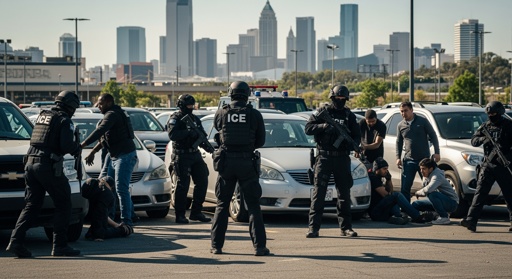
- New York’s new limits on cooperation with federal immigration officers have triggered a promise from Washington to “flood the zone” with agents—raising stakes for public safety, civil liberties, and state-federal power.
Story Snapshot
- Border policy chief Tom Homan vowed a surge of federal immigration agents in New York after the state advanced anti-cooperation measures [4].
- New York leaders argue restricting jail access protects residents and due process, escalating a long-running sanctuary policy clash [12][13].
- Operational specifics of any surge remain unclear because federal agencies rarely release jurisdiction-level deployment plans [12].
- Heightened rhetoric reflects a broader national battle over enforcement tactics and community trust in government [15].
Homan’s Warning: “More ICE Than You’ve Ever Seen”
Tom Homan, the administration’s border policy lead, warned that New York’s push to curb cooperation with federal immigration officers would invite a larger federal presence. Homan said the government would “flood the zone,” signaling more agents and stepped-up arrests if local jails decline to honor requests or facilitate transfers [4]. Reporting from national and local outlets captured the remarks and their target: states and cities advancing sanctuary-style limits that restrict coordination with federal immigration enforcement [12][15].
Homan’s message framed the issue as a safety and law-enforcement necessity, arguing that limiting arrests inside jails forces officers into neighborhoods, increasing risks for officers, bystanders, and arrestees. Coverage highlighted Homan’s past pattern of tying noncooperation to intensified federal operations, including warnings that jurisdictions should expect more personnel “on the ground” when they block access to custody settings that traditionally enable lower-risk apprehensions [5].
New York’s Position: Community Protections Over Cooperation
Democratic lawmakers in New York have continued to advance anti-cooperation bills despite federal warnings. Reporting indicates they view these measures as civil-rights protections that reduce fear of local policing and protect due process for noncitizens, even as critics say the policies impede removal of individuals with criminal convictions [12]. Governor Kathy Hochul’s office publicly pressed federal officials to scale back what the state characterizes as aggressive operations, underscoring a widening policy and messaging gap [13].
State-level measures typically focus on limiting jail access, detainer compliance, and data sharing, which shifts arrests from controlled jail settings to field operations. That tactical shift is central to the dispute: federal officials contend jail-based transfers reduce risk and avoid collateral arrests, while state leaders counter that decoupling local services from federal enforcement improves community trust and cooperation with local police investigations [12].
What We Know—and What We Do Not—About a Potential Surge
Public records and prior practice suggest that granular details about deployments, unit counts, and arrest targets are rarely disclosed in advance. Coverage of New York’s latest clash notes that rhetoric often outpaces transparent metrics, leaving residents without clear timelines, scale estimates, or neighborhood-by-neighborhood implications when a surge is threatened or underway [12]. Reports captured Homan’s threat but did not include a published federal operations plan specific to the new state measures [4][12].
Tom Homan Vows Major ICE Expansion in New York After Sanctuary Law Fight
Border Czar Tom Homan says New York will see a significant increase in ICE operations after Governor Kathy Hochul signed legislation limiting cooperation with federal immigration enforcement. Homan argued… pic.twitter.com/IZF7IDTHN2
— Fitzgerald Kennedy John Jr. (@FitzgeraldJr17) June 8, 2026
This information gap fuels concerns across the political spectrum. Conservatives argue that federal officers are forced into riskier street operations because local leaders block safer jail transfers. Liberals argue that field operations heighten fear, increase chances of mistaken or collateral arrests, and erode trust between immigrant communities and local authorities. Both sides share a deeper worry that opaque decision-making by powerful officials leaves neighborhoods caught between dueling governments that are not clearly accountable [12][15].
Why This Fight Resonates Beyond New York
The New York dispute mirrors a recurring national pattern: states and cities pass limits on cooperation with federal immigration enforcement; federal leaders answer with warnings of increased operations; and residents receive more rhetoric than verifiable deployment data. Newsrooms documented this cycle in New York’s current legislative push and in Homan’s repeated public statements promising intensified enforcement in noncooperative jurisdictions [12][15]. The unresolved tension centers on who sets priorities when public safety, civil rights, and constitutional roles collide.
What to Watch Next
Residents should watch for formal federal notices to local law enforcement, communications to court systems and jails, and any public-facing arrest statistics that distinguish jail-based transfers from neighborhood operations. Lawmakers may also face legal tests over state restrictions and federal supremacy in immigration enforcement. Absent transparent metrics and clear intergovernmental agreements, the outcome may be measured less by official statements and more by street-level experiences in communities across New York [12][15].
Sources:
[4] YouTube – Tom Homan’s blunt warning amid intensifying immigration crackdown
[5] Web – Border czar Tom Homan threatens to ‘flood’ uncooperative states …
[12] Web – Border Czar Tom Homan says shift in strategy will lead to a …
[13] Web – Tom Homan’s ICE surge threat isn’t stopping sanctuary bills in New …
[15] YouTube – Tom Homan Responds To Kathy Hochul Imposing Restrictions On …