A wrong-way crash that killed a Massachusetts state trooper is raising hard questions about drunk driving, public safety, and a system that keeps failing to stop repeat tragedies.
Story Snapshot
- A new report says Hernan Marrero had 10 alcoholic drinks before the crash that killed Trooper Kevin Trainor.
- Toxicology testing found Marrero’s blood alcohol level was 0.192, more than twice the legal limit to drive.
- Traffic cameras captured Marrero’s Jeep going the wrong way on Route 1 for nearly two miles before impact.
- Experts say alcohol impairment is the main cause of deadly wrong-way crashes, which are rising in Massachusetts.
How the Night Unfolded Before the Fatal Crash
According to a report from the Essex County district attorney’s office, 50-year-old Hernan Marrero spent hours drinking at restaurants on Boston’s North Shore before the deadly crash. Investigators say he had one alcoholic drink at a restaurant in Waltham, then drove to Tribu Mexican Kitchen and Bar on Route 1 in Saugus. There, staff records and video show he consumed nine more drinks between 9:20 p.m. and 12:53 a.m., all before getting back behind the wheel and heading north.
Just after 1 a.m., cameras from the Massachusetts Department of Transportation captured Marrero’s Jeep entering a special turn lane on Route 1 in Peabody known as a “jughandle.” This jughandle lets drivers turn around and go south, and it is marked with clear “do not enter” and wrong-way signs. Video shows the Jeep grazing a guardrail, running a red light, then turning too sharply and re-entering the northbound lanes while traveling southbound. That mistake put him directly into oncoming traffic.
The Wrong-Way Collision That Killed a Trooper
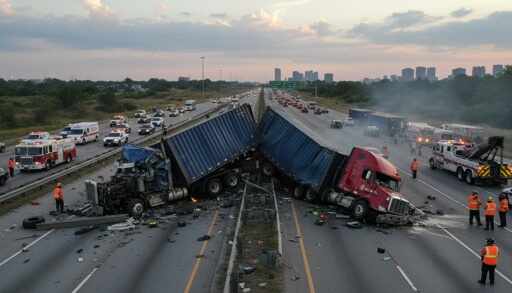
After the Jeep turned the wrong way, investigators say it traveled about 1.8 miles south in the northbound lane of Route 1. During those minutes, Marrero was driving toward cars that had no reason to expect a vehicle coming at them head-on. Massachusetts State Trooper Kevin Trainor was in a marked cruiser patrolling the highway when his car became the first to encounter the Jeep. The two vehicles collided head-on, killing both Marrero and Trooper Trainor at the scene, and leaving a family and a police force grieving.
Toxicology testing later performed on Marrero’s blood found a blood alcohol concentration of 0.192. For drivers 21 and older in most states, the legal limit to drive is a blood alcohol level of 0.08. That means Marrero’s level was more than twice what the law allows and well into the range where judgment, reaction time, and coordination are deeply impaired. Officials also reported the presence of the antidepressant and smoking-cessation drug bupropion and its metabolite in his blood, which can interact with alcohol and further affect behavior.
Why Drunk Wrong-Way Crashes Keep Happening
This case does not stand alone; it fits a clear pattern that safety experts have tracked for years. A special report from the National Transportation Safety Board found that more than half, and possibly up to three quarters, of wrong-way drivers in deadly crashes are impaired by alcohol. The same analysis showed that about 60 percent of fatal wrong-way collisions are caused by alcohol-impaired drivers. In other words, when someone drives the wrong way and people die, alcohol is usually part of the story.
Studies of crash data also show when these wrecks tend to happen: weekends, between midnight and 5 a.m., the very hours when Marrero was drinking and driving. In Massachusetts, lawyers and state data report that intoxicated drivers are involved in roughly 60 percent of wrong-way crashes. Local reports note that deadly wrong-way crashes are rising at about twice the national rate here, with alcohol impairment named as the most important factor. These trends feed a sense, across the political spectrum, that basic road safety is getting worse while officials talk more than they act.
Accountability, Overservice, and a System Under Strain
Under Massachusetts law, a driver who causes a crash through negligence, including driving impaired or the wrong way, is civilly liable for the harm they cause. In some cases, that liability can also extend to restaurants or bars that over-serve a customer who later causes a drunk driving crash. Marrero’s reported ten drinks in one night raise tough questions about how alcohol was served and whether staff or managers had a duty to cut him off or call someone else to drive him home.
Essex County DA Paul Tucker has released a summary statement on investigation into fatal crash on Rt. 1 in Lynnfield of 5/6/26 which resulted in the death of @MassStatePolice Trooper Kevin Trainor, 30, of Georgetown, and Hernan Marrero, 50, of Roslindale.https://t.co/TZJxoqSKMu
— Essex County District Attorney Paul Tucker (@EssexCountyDA) July 15, 2026
For many Americans, this story hits a deeper nerve. People on the right see yet another preventable crime fueled by lax enforcement and a culture that shrugs at drunk driving until a police officer or innocent family dies. People on the left see a system that talks about “Vision Zero” and safety but fails to invest in better transit, late-night options, and enforcement that could keep impaired drivers off the road. Both sides see headlines, press conferences, and promises, but they keep watching the same kind of tragedies repeat.
What Leaders Are Doing — and Not Doing — About Wrong-Way Crashes
State leaders in Massachusetts have announced plans to add clearer wrong-way and do-not-enter signs, better pavement markings, directional arrows, and lighting at highway ramps and interchanges. The American Automobile Association Foundation has urged more steps like stronger ignition interlock rules, targeted patrols near bar districts, and safer ramp designs, especially at high-risk locations like Route 1. These ideas show that many solutions start at the driver level but also depend on smart road design and tough, fair enforcement.
Yet families and taxpayers watching this case may ask a simple question: if experts have known for years that drunk wrong-way driving kills, why are we still here? Big promises from politicians do not change the fact that enforcement is uneven, restaurants sometimes over-serve, and late-night road design still lets impaired drivers make deadly mistakes. The story of Hernan Marrero and Trooper Kevin Trainor is not just about one man’s choices. It is also about a system that saw the risk coming miles away and still could not stop it.
Sources:
nypost.com, wcvb.com, law.justia.com, lawmagazine.bc.edu, warroom.armywarcollege.edu, usni.org, boanlaw.com, mahaneypappaslaw.com, aaafoundation.org