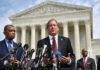
A Homeland Security watchdog has found Corey Lewandowski may have steered huge government contracts for personal gain, bringing possible criminal charges a step closer in Washington’s latest pay‑to‑play scandal.
Story Snapshot
- Homeland Security investigators found Corey Lewandowski may have improperly influenced or awarded major contracts while advising Secretary Kristi Noem.
- Several contractors say they were pressed to pay or reward Lewandowski to protect or expand their Department of Homeland Security work.
- The Department of Homeland Security inspector general probe could lead to a criminal referral to the Justice Department.
- The case highlights how unelected insiders can quietly control billion‑dollar deals while taxpayers are kept in the dark.
DHS watchdog focuses on Lewandowski’s contract power
The Department of Homeland Security inspector general has launched a broad investigation into how contracts were handled under former Secretary Kristi Noem and her unofficial chief of staff, Corey Lewandowski. Investigators are looking at grants and contracts, including those awarded without normal competition, covering hundreds of millions of dollars across the department. Staff have been ordered to preserve emails, meeting notes, and contract files as the watchdog examines whether laws or ethics rules were broken in the process.
Reporting indicates that one focus is a massive advertising and public relations effort worth about $220 million that featured Noem in prominent ways. Sources told investigators that these and other contracts often required Noem’s personal sign‑off, giving her office unusual control over who got paid and when. That centralization slowed some disaster and border projects but increased leverage over contractors, raising questions about who benefited from the delays and from the final awards.
Pay‑to‑play allegations from DHS contractors
Several Department of Homeland Security contractors told White House officials they were asked to pay Corey Lewandowski or route benefits to him in exchange for protecting or expanding their contracts. One contractor source described dropping bids for two lucrative projects after hearing they would need to indirectly compensate Lewandowski to move forward. NBC News reported that Lewandowski allegedly told a leader at the prison company GEO Group that he expected something in return for helping safeguard and grow their Homeland Security deals.
Members of Congress say they have heard similar stories. Representative Mike Levin called Lewandowski “a man with no official title, no confirmed role, and no public accountability” who allegedly ran a pay‑to‑play scheme involving billion‑dollar contracts. Another lawmaker, Representative Peter Welch, highlighted that Lewandowski served as a “special adviser” to Noem even as officials insisted he had no formal say over contracts, a gap that fuels suspicion among both critics and watchdog groups.
Lewandowski’s role, denials, and missing transparency
Corey Lewandowski held a “special government employee” status at Homeland Security, which let him work in a powerful advisory role while remaining outside many normal rules for full‑time officials. The department’s general counsel told reporters he was following all required ethics and disclosure rules and had filed a confidential financial disclosure not available to the public. That secrecy angered transparency advocates, who argue taxpayers deserve to know whether an insider with that much sway had private financial ties to contractors.
Lewandowski has denied all wrongdoing, saying he never demanded payments and never took “one penny” from contracts he helped shape. His spokesperson also insists he had no formal authority over awards and was not paid by companies seeking work from Homeland Security. Despite these denials, lawsuits and congressional inquiries are pressing to see his full financial disclosures and internal records, suggesting that investigators and lawmakers do not believe the public has the full story yet.
Congress and watchdogs see a deeper systemic problem
Democratic members of Congress on the House Oversight Committee and the Senate Homeland Security and Governmental Affairs Committee have opened and expanded investigations into Lewandowski’s alleged pay‑to‑play scheme. They are demanding contract files, calendars, and emails with firms like GEO Group that may have benefited from his influence. Independent group American Oversight has also sued Homeland Security for records, saying the secrecy around Lewandowski violates the public’s right to know how tax money is spent.
https://twitter.com/PolitomixNews/status/2075861833471476016
This case taps into frustration shared by many conservatives and liberals who feel Washington is run for connected insiders, not working Americans. Here, a politically connected adviser, not elected by anyone, appears to have helped steer huge security contracts behind closed doors while both parties argue about border policy and crime. Whether the inspector general sends a criminal referral or not, the picture that emerges is of a system where unelected power brokers can cash in while citizens struggle to afford basics.
Sources:
nypost.com, nbcnews.com, cnn.com, facebook.com, youtube.com, abcnews.com, hassan.senate.gov, americanoversight.org, clearinghouse.net, oversightdemocrats.house.gov, resist.bot, stateandfed.com