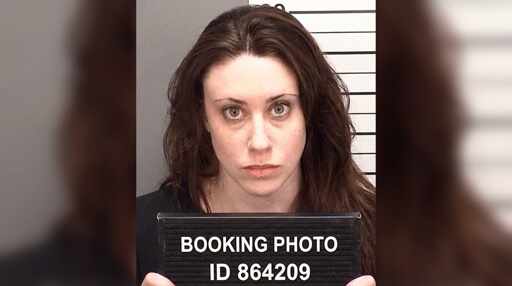
In a case that exposes how badly America’s systems can fail, an Ohio mother whose 16 children were rescued from a filthy “house of horrors” is now begging the public to stop sharing her photo online and to let her disappear from view.
Story Snapshot
- Sixteen children were rescued from a tiny, feces-covered room in a rural Ohio home, leaving a community stunned and angry.
- Four adults, including mother Elizabeth Siders, face 16 second-degree felony child endangerment counts each and could spend life in prison if convicted.
- Authorities say the children lived “almost feral,” cut off from school, doctors, and the outside world for years, while neighbors and agencies missed the warning signs.
- Elizabeth’s lawyer is pushing back on “pure evil” labels and asks people to stop posting her photo, raising hard questions about blame, media outrage, and a system that let this happen.
Inside the ‘house of horrors’ and the rescue that shocked the town
Hamden, a small town in rural Ohio, became the center of national attention after deputies and state agents entered a rundown home and found 16 children crammed into what officials describe as a roughly 12-by-12-foot room. The floor and walls were smeared with human feces and soaked with urine. Investigators compared the setting to livestock stalls, saying the conditions were worse than what most farmers would allow for animals. Some children could barely speak. One 18-year-old girl, described as developmentally disabled, could not write her own name. Seven of the children were rushed to hospitals, and at least two needed critical care, including breathing tubes. To many locals, it felt like a nightmare that had been hiding “right under our noses.”
The four adults in the home — grandparents Gary Siders Sr. and Christina “Lynn” Siders, and their son Gary “Bub” Siders Jr. with his wife Elizabeth — were arrested. Each now faces 16 counts of second-degree felony child endangerment, one count for every child, because prosecutors say the neglect caused “serious physical harm.” They have pleaded not guilty, and a judge set bond at $300,000 for each defendant. If convicted on all counts, each adult could face a theoretical maximum of more than a century behind bars. Under Ohio law, prosecutors do not need to prove intent to injure for every child; they must show that the adults created a substantial risk of serious harm by how they cared for the kids. In this case, the filthy room, visible malnutrition, and hospitalizations are central to that legal argument.
The mother’s plea: stop sharing my photo and calling me ‘pure evil’
As media outlets blasted images of the home and mugshots across the country, Elizabeth Siders quickly became the face of the story. New York Post and other outlets called the children “almost feral” and labeled the adults “pure evil,” language that echoes many Americans’ anger but also shapes public opinion before any trial. Elizabeth’s defense attorney, Tommy Stoly, has pushed back hard on that framing. He says the first thing Elizabeth asked in jail was about her children’s safety, arguing that this shows she is not the monster people imagine. Stoly also disputes a key claim from officials — that the children were strictly confined to that one small room — saying he has not yet seen hard evidence that proves this detail.
More quietly, Elizabeth has sent another message through her lawyer: she wants people to stop sharing her photo online and “take them off here.” That plea comes as social media feeds and comment sections explode with anger, mockery, and sometimes wild rumors about the family. Law enforcement has already warned the public about fake fundraisers and false claims tied to the case, including stories of twenty children instead of sixteen. For both conservatives and liberals who worry that our outrage culture can crush due process, her request raises a basic question. Where is the line between necessary public attention and a digital mob that makes a fair trial impossible?
Legal battle ahead: harsh charges, insanity claim, and a system under fire
The criminal case is still in its early stages, and many facts remain sealed or under investigation. The state’s amended complaint lists 16 counts of child endangerment for each adult and specifies “serious physical harm” for every child. One earlier endangerment count tied to a possible seventeenth child was dropped at arraignment, hinting at gaps or uncertainty in the evidence. Elizabeth’s lawyer has signaled that she may seek reduced bond by pointing to her lack of prior criminal record and reports that she could be pregnant again. Her legal team also suggests she may have been a victim herself, married young, with only an eighth-grade education and raised in a tight, controlling family culture. That argument does not erase responsibility, but it challenges the simple idea that all adults involved share equal blame.
The grandfather, Gary Siders Sr., adds another layer of complexity. His attorney has asked the court to find him not guilty by reason of insanity, and a forensic mental evaluation is underway. He already received a recognizance bond because of serious health problems, though he could be monitored by an ankle device if released. A special prosecutor, Aneka Collins, has been appointed due to possible conflicts of interest involving local agencies, which may slow the case and deepen mistrust of county institutions. All of this unfolds under Ohio’s child endangerment laws, which focus on “substantial risk” of harm rather than only obvious physical injuries. Past cases in the state show that long-term confinement in filthy spaces and failure to seek medical care can be enough for conviction.
How 16 children slipped through the cracks of school, welfare, and community
Beyond the horror inside one house, this case hits a nerve because it suggests a wider breakdown. Investigators say none of the 16 children were enrolled in school, and the family largely avoided doctors and government records for years. Neighbors told reporters they almost never saw the kids playing outside or even standing in the yard. That raises hard questions for a country already divided over big topics like immigration, welfare spending, and the “deep state.” If millions worry the government is intrusive and wasteful, how did a family with sixteen children manage to stay invisible to those same bureaucracies?
Mother of 16 'almost feral' kids in Ohio house of horrors makes twisted request through her lawyer https://t.co/GWsoll7Vzf
— JT Badenov (@cbinflux) July 15, 2026
Child welfare agencies across different Ohio counties may have had contact with the Siders family before 2026, but those records are not yet public. If earlier warnings were missed or ignored, the failure will not fall only on four adults. It will also land on the systems that claim to protect children while spending billions of taxpayer dollars. For many Americans on both the right and the left, this story taps a shared fear: the people in charge — from local officials to state leaders — are quicker to appear at press conferences than to catch danger in real time. This Ohio “house of horrors” is not just a crime scene. It is a test of whether our institutions can admit their mistakes, fix broken processes, and treat these sixteen children as more than props in a political and media drama.
Sources:
nypost.com, youtube.com, lamag.com, washingtonstand.com, news.com.au, ohioattorneygeneral.gov, facebook.com, pbs.org, supremecourt.ohio.gov, themeadelawgroup.com