Three people died on a quiet New Mexico dirt road, nearly twenty rescuers wound up in decontamination showers, and officials still cannot tell the public exactly what everyone touched.
Story Snapshot
- Three people in a Mountainair, New Mexico home died after a suspected overdose call turned into a hazardous-substance scene.
- Roughly 18 first responders developed symptoms and were decontaminated and hospitalized after contact with an unknown substance.[3]
- Authorities say the substance appears spread by contact, not through the air, and that there is no ongoing threat to the public.
- Key facts remain unresolved, from the exact substance involved to how the responders became sick despite training and protocols.
From Routine Overdose Call To Full Hazmat Crisis
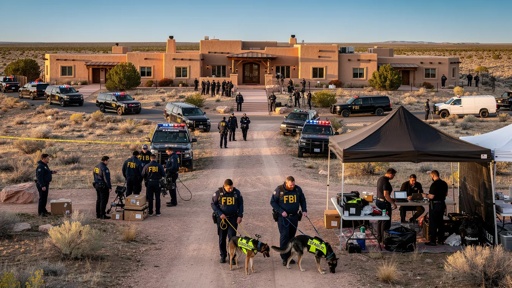
Deputies and medics rolled toward the Mountainair house expecting another overdose run, the kind small-town responders handle with grim routine. Reports describe two people found dead on arrival and two more unresponsive, with one later dying at the hospital and the fourth surviving under treatment. That alone would mark a bad day in Torrance County. Then responders themselves began feeling sick: nausea, dizziness, headaches, vomiting. The call flipped from “save the patient” to “save the rescuers” in minutes.[1][3]
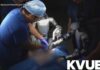
New Mexico authorities escalated fast. Albuquerque Fire Rescue’s hazardous-materials team arrived in full protective suits to enter the home and begin the slow, methodical process of identifying what everyone had just walked into.[3] State police reported that more than a dozen, and later roughly 18, first responders were evaluated or hospitalized at University of New Mexico Hospital for possible exposure.[1][3] That hospital reported over twenty people assessed and decontaminated, including symptomatic responders and non-symptomatic colleagues checked out of caution.[1]
What Officials Know, What They Do Not, And Why That Matters
Authorities say the substance appears to spread by contact, not through the air, and that there is no ongoing threat beyond the home.[1] Mountainair’s mayor publicly ruled out carbon monoxide and natural gas, two common silent killers in enclosed spaces, based on early testing. That narrows the field toward drugs or other chemicals. Yet the substance remains officially unidentified in publicly available reporting; officials have not released any lab confirmation, toxicology report, or technical hazard bulletin tying symptoms to a specific agent.[1][3]
Those gaps matter because the event sits at the intersection of two hot-button debates: the real dangers of modern drug cocktails and the tendency of early media narratives to outrun the science. Reports clearly document real physical harm: three deaths inside the home, serious illness in some responders, and a wider group of rescuers monitored after exposure.[1][3] At the same time, the shifting counts—“more than a dozen,” then 18, 19, even 22 people evaluated or hospitalized—show an investigation still in motion rather than a closed case.[1][2][3] Responsible citizens should track those distinctions carefully.
Overdose, Unknown Substance, Or Something More Complex?
Local officials repeatedly referenced drugs and overdose as likely factors in the three deaths, but they did so while acknowledging that the precise substance was still unknown.[1] That combination easily feeds alarmist talk about exotic street compounds that can supposedly imperil anyone who enters the room. American conservatives who insist on common sense should demand something better: clear evidence about what happened, not vague fear campaigns that treat every overdose scene like a chemical weapons lab without proof.
Three people are dead and nearly 20 first responders ended up hospitalized after walking into what police say may have been an overdose scene in New Mexico.
Authorities say responders in Mountainair started experiencing nausea and dizziness after exposure to an unidentified… pic.twitter.com/KAzKDtTZhL
— Fox News (@FoxNews) May 21, 2026
At the same time, brushing off responder illness as mere “overreaction” would be equally foolish. Symptoms began after first responders entered and worked in the home, and some required serious hospital care.[1][3] Hazmat teams do not deploy, and mass decontamination lines are not set up, because someone felt a little queasy. Something in or on that scene hurt trained professionals. The reasonable conservative position is not hysteria or denial, but a demand for rigorous documentation and transparency once the dust settles.
Why Small-Town Incidents Deserve Big-Time Transparency
Mountainair sits far from Washington or Wall Street, but the way this case is handled sends a national signal. When state police lead an investigation, hospital systems control toxicology data, and multiple agencies hold fragments of the evidence, the temptation to issue calming sound bites and limit detailed disclosure can grow strong.[1][3] Officials have already said the public faces no ongoing threat, which may reduce pressure to publish full incident reports, lab findings, and environmental test results once available.
Americans who value limited government and personal responsibility should resist that drift. Limited government does not mean unaccountable government. The community should eventually see incident timelines, decontamination protocols, and at least high-level toxicology conclusions in de-identified form. That information would help other departments refine training and personal protective equipment decisions. It would also allow families, reporters, and taxpayers to judge whether the response balanced prudence with realism or leaned on theatrical hazmat optics to cover uncertainty.
How This Story Might Shape The Next Crisis Response
Events like Mountainair set precedents. If authorities later confirm a specific drug or chemical that sickened responders by contact, departments nationwide will update scene-safety rules, medical examiners will adjust overdose classifications, and lawmakers will cite those findings in debates over border security and drug enforcement.[3] If, however, final reports quietly show a more mundane explanation, the initial “mystery substance” headlines will have already etched fear into the public mind while the correction arrives with a whisper instead of a siren.
Citizens watching this case do not need to become amateur toxicologists. They only need to insist on a basic standard: when three neighbors die in a house and nearly twenty rescuers land in decontamination tents, the government should eventually tell the country what, as best it can be known, was on that floor, in that air, or on that skin. Mountainair deserves that answer. So does every town that may face the next “unknown substance” call tomorrow.
Sources:
[1] Web – 3 dead in New Mexico & first responders treated for exposure to …
[2] Web – Three dead, 18 first responders hospitalized after hazmat incident at …
[3] Web – 3 dead in New Mexico and first responders treated for exposure to …