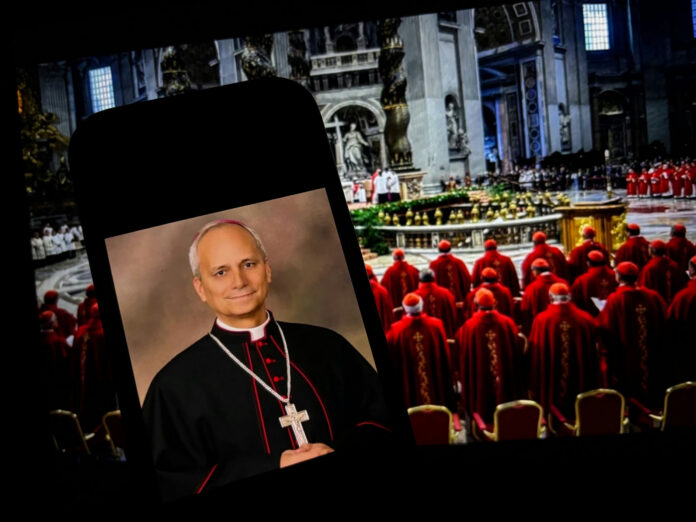
Senior Pentagon officials reportedly summoned the Vatican’s top American diplomat to deliver a stark warning: America has the military power to do whatever it wants in the world, and the Catholic Church had better take its side.
An Unprecedented Diplomatic Confrontation
The Free Press first reported the explosive January 2026 meeting, revealing that US Under Secretary of Defense for Policy Elbridge Colby summoned Cardinal Christophe Pierre, the Vatican’s envoy to the United States, to a closed-door Pentagon session. Vatican sources told the publication that American officials delivered what they characterized as a bitter lecture, warning that the Catholic Church needed to align with US foreign policy positions. The timing followed Pope Leo XIV’s State of the World address to Vatican diplomats, where he criticized diplomacy based on force and what he termed imperialist occupation.
The Pentagon pushed back against the reporting, calling the account highly exaggerated and distorted. Officials insisted the discussion was respectful and emphasized the United States’ highest regard for the Holy See. Yet the Vatican’s subsequent decision to indefinitely postpone the papal visit speaks volumes about the severity of whatever transpired behind those closed doors. No pope had ever been scheduled to visit America for such a significant national milestone, making the cancellation a diplomatic earthquake.
The First American Pope Versus American Power
Pope Leo XIV holds a unique position in Catholic history as the first American-born pontiff. His election came during escalating global tensions, particularly the ongoing Ukraine conflict. Rather than reflexively supporting Washington’s approach, he has consistently advocated for dialogue-based peace and criticized what he views as militaristic foreign policy. His State of the World address took particular aim at the Trump administration’s Donroe Doctrine, an updated Monroe Doctrine asserting unchallenged American dominance in the Western Hemisphere.
The irony cuts deep. An American pope, presumably a source of pride for US Catholics and a potential soft power asset, now finds himself at odds with his homeland’s government. Vatican officials briefed on the Pentagon meeting confirmed that US representatives took particular offense at the pope’s characterization of force-based diplomacy and apparent criticism of American positions on Ukraine. The power dynamics reveal a fundamental clash between military might and moral authority, with the Pentagon reportedly invoking America’s capacity to act unilaterally in world affairs.
Historical Echoes and Modern Threats
MSNBC’s Morning Joe panel, including commentator Mike Barnicle, described the reported Pentagon behavior as absurd intimidation that forfeits American soft power. Barnicle noted that the United States cannot accomplish everything with bullets and bombs, highlighting the strategic shortsightedness of alienating the Vatican. More ominously, the panel referenced the 14th-century Avignon Papacy, when French political pressure forced the relocation of the papal seat from Rome to Avignon, effectively subjugating church independence to state power. Vatican sources suggested Pentagon officials invoked this historical precedent as a veiled warning.
The comparison to Avignon raises disturbing questions about the current administration’s understanding of diplomatic relationships and religious independence. Whether intended as historical analogy or actual threat, such references demonstrate a remarkable departure from traditional American respect for religious institutions. The Catholic Church has weathered centuries of political pressure, from Roman emperors to European monarchs, yet the notion of an American administration applying similar coercion represents a troubling evolution in church-state relations.
Competing Narratives and Unanswered Questions
The story emerged in April 2026 through The Free Press and quickly spread across multiple media outlets, from the Hindustan Times to Euromaidan Press and Meidas News. Each source corroborated the core details: the January meeting, the alleged warning about American military power, and the subsequent visit cancellation. The Pentagon’s denial focused on characterization rather than substance, disputing the tone but not explicitly denying that concerns about the pope’s remarks were raised. Neither the Vatican nor the Trump administration has issued comprehensive public statements beyond the visit postponement announcement.
The lack of independent verification leaves some details uncertain, particularly the exact wording of Pentagon officials’ statements and whether the Avignon Papacy was explicitly mentioned. The story relies on anonymous briefings from Vatican and US officials present at or informed about the meeting. Yet the consistency across diverse sources, combined with the concrete outcome of a canceled papal visit, lends substantial credibility to the core premise. The Trump administration’s approach to foreign policy, emphasizing hard power and transactional relationships, aligns with the reported confrontational stance toward Vatican criticism.
The Cost of Diplomatic Bullying
The fallout extends beyond a single canceled visit. The United States has forfeited a significant soft power opportunity during its 250th anniversary celebrations, when hosting the first American pope would have symbolized both national pride and moral leadership. Instead, the message sent globally suggests an administration willing to pressure even religious institutions into political alignment. For American Catholics, watching their pope effectively exiled from participating in a historic national celebration raises uncomfortable questions about religious freedom and government overreach when political convenience dictates.
Long-term implications may prove even more consequential. Pope Leo XIV’s willingness to criticize force-based diplomacy resonates with growing global skepticism about American interventionism. By attempting to silence that moral voice through intimidation, the Pentagon may have amplified it instead. The historical parallel to Avignon, whether invoked deliberately or interpreted by Vatican sources, evokes centuries of church resistance to political subjugation. The Catholic Church outlasted the Roman Empire, survived the Reformation, and endured communist persecution. It seems unlikely to bend to Pentagon pressure now, regardless of America’s current military superiority.
Sources:
Pentagon called in Vatican’s top US diplomat over Pope’s anti-war remarks, media reports
Pope Cancels Visit to the U.S. After Pentagon Threatens Vatican: Report